
Engagement that includes, uplifts and sustains
Most engagement today is built on manipulation. We combine behavioural design and gamification with AI personalisation to create experiences that respect your people’s autonomy while delivering business results. We call it inclusive engagement design.



The Engagement Crisis
Most engagement fails because it starts in the wrong place. Organisations bolt on points, badges and leaderboards without ever asking: what do the people we are trying to engage actually want? What are their goals? What motivates them? Good gamification design starts with understanding your audience’s intrinsic motivations, their need for progress, autonomy, mastery and belonging, and then designing experiences that help them reach their goals while serving your business objectives. That is the difference between engagement that lasts and engagement that collapses after the novelty fades.
Bad gamification has been superficial for years, and AI is making it worse. Machine learning sees what has been used most and assumes that is what works best. So the same shallow mechanics get repeated at exponential scale: more badges, more leaderboards, more points, none of it connected to what people actually care about. Learning completion rates stay at 25%. Customer loyalty programmes feel transactional instead of meaningful. Marketing campaigns spike and crash. Employee engagement initiatives become background noise. Meanwhile, AI deployed alone personalises the wrong things, optimising for time spent instead of capability gained, for clicks instead of trust.
This plays out everywhere: in learning and development where people check out by week two, in customer engagement where loyalty feels like a points trap, in marketing where campaigns optimise for attention rather than connection, in recruitment where candidate experiences feel generic, and in sales enablement where teams burn out chasing metrics that do not measure what matters. The €50 billion European engagement market is split between companies building trust and companies building addiction. The difference is not the technology. It is whether you start with your people’s motivations or your own metrics.
There is a better way. It starts with understanding your people.
Gamification and AI, never one without the other
We start where good engagement always starts: with the motivations and goals of the people you are trying to reach. Not your KPIs, their goals. Then we design experiences that help them get there, using game psychology to create sustainable motivation and AI to personalise at scale.
Gamification without AI plateaus. People see the same mechanics, the same rewards, the same endpoints. AI without gamification feels hollow, eerily personalised but missing the human spark that makes people want to engage. We never sell one without the other. Together they create engagement that adapts, includes and proves its worth, for your people and for your business.
Purpose loops, not dopamine loops.
Start from your team’s challenge

Marketing & customers
Turn one-off campaigns into a rhythm of return: quizzes, loyalty loops and lead capture people enjoy.
See marketing playbooks →
Product & onboarding
Help users reach first value faster and build the habit in week one, when retention is decided.
See product playbooks →
People & learning
Move from course completion to capability, and from enforced processes to habits people keep.
See people playbooks →What AI and gamification do for your business
Game psychology gives people a reason to start and to keep going. AI gives you the speed and the reach to do it for everyone, not just a pilot group. In practice that shows up in six places.
People finish what they start
Onboarding, training and new processes that still have a pulse in week three, instead of stalling once the launch buzz fades.
Your message actually lands
People explore, learn and remember what you told them, rather than skimming a page for fifteen seconds and leaving.
Interest turns into action
Sign-ups, leads and purchases from journeys that feel like play rather than pressure, personalised to what each buyer cares about.
The customers you have stay
Loyalty built on a real value exchange instead of discounts, with AI spotting disengagement before it turns into churn.
You can prove capability
Not attendance, not completion certificates. Evidence that people can do the thing, which is what the business was asking for.
Your team gets time back
One repeated process at a time, handled by AI that works from your own knowledge and sounds like you rather than like a robot.
Every one of these has a fixed-price way in
From a 90 minute strategy session to a built AI agent or a full Pathway.
What we solve
Every engagement challenge falls into one of four categories. Our EARN framework covers the full lifecycle, because real engagement is not a single moment, it is a sustained experience.
Engage
Your people are present but not involved. Learning completion is low, participation is surface level, and energy is flat. We design experiences that connect to intrinsic motivations, progress, mastery and belonging, so people engage because the experience is meaningful, not because they were told to.
Attract
You need to draw the right people in: candidates, customers, learners, users. We design gamified experiences that make your first impression compelling and your onboarding irresistible. AI personalises the journey from the first touchpoint, so every person feels like you built it for them.
Retain
Getting people in the door is one thing. Keeping them is another. We build habit loops, progression systems and social mechanics that give people reasons to come back, not through addiction but through genuine value. AI detects drop-off patterns early and triggers re-engagement before you lose them.
Nudge
Sometimes people need a gentle push towards the right action: completing a course, making a purchase, adopting a new process. We design ethical nudges grounded in behavioural science, with timely prompts, social proof, progress visibility and smart defaults. AI personalises the nudge to the person and the moment. No dark patterns, no manipulation, just the right prompt at the right time.
Designing engagement since 2012, not talking about it
We have done this for global brands, SMEs and government bodies, across Europe, the UK and further out.
An Coppens, Chief Game Changer
- Over 20 years in employee engagement, learning and business transformation
- Award-winning gamification designer, author and keynote speaker
- Designs for recruitment, marketing, learning and product
- Writes the playbooks so teams can run the method themselves
How we are set up
- Remote-first since the start, with a small core team and specialists brought in per project
- Two companies, one team, in the UK and Sweden
- Our own platform, Playerence, running quizzes and campaigns for European brands
- Ethical by design, built and hosted in Europe
The Habit Building Playbook
Design habits that drive goals
The full working method we use with clients, written down so your team can use it without us in the room.
- EARN and PROVE IT frameworks, in full
- Five applied contexts, from products to onboarding
- 13 canvases, diagnostics and workshop tools
Software built on the same thinking
Work that changed behaviour
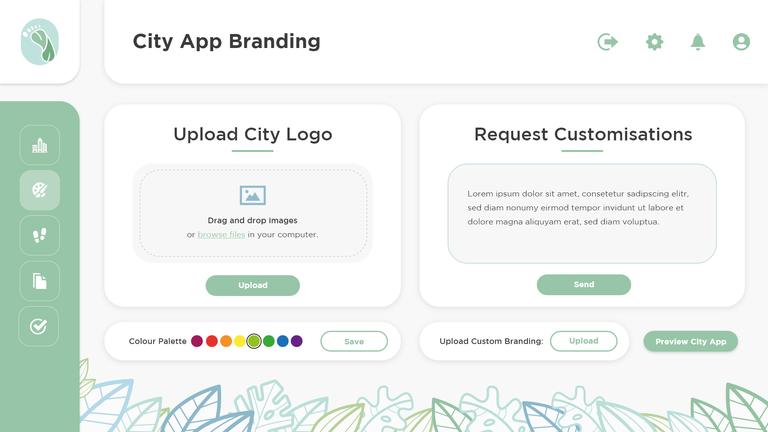
Greener commuting through a gamified app
Peer challenges for citizens within 7 km of work

Attract a more diverse workforce
A submarine adventure that lets candidates try the role
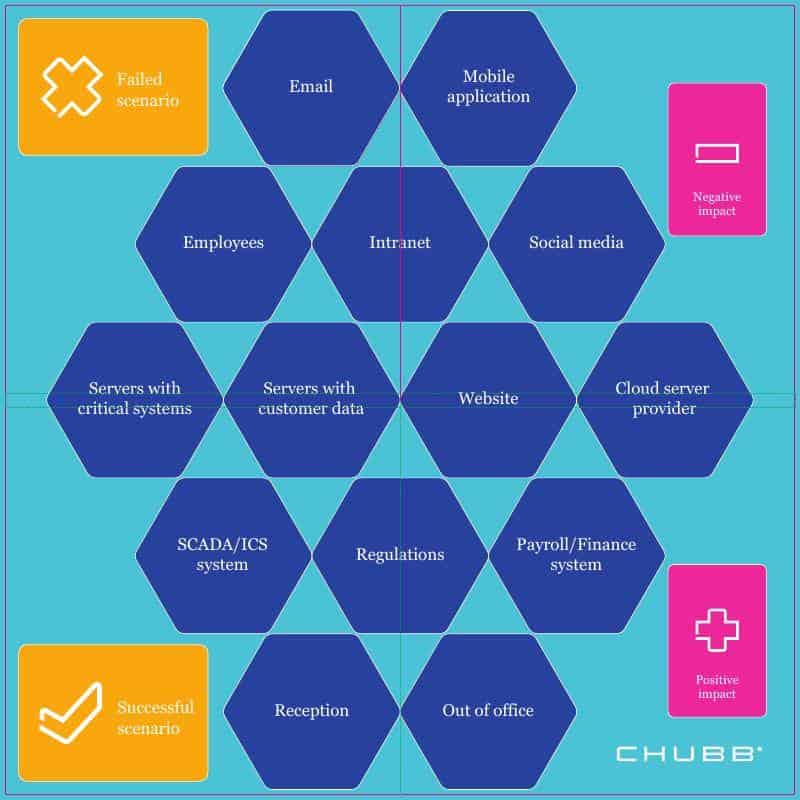
Hacksagon: a board game that boosted cyber insurance sales
Playing to win with a gamified sales tool
What clients say
We have been working with An and the Gamification Nation team for the past year and it has been a total pleasure to have her on the 5App team. An provides a refreshingly different perspective to our strategy work, adding value throughout the lifetime of the project. Her ideas and innovative approaches have informed and challenged our thinking in all the right ways.
Gill FroodHead of Marketing, 5app.com
As a work-based training company, we must motivate, engage and arm our clients with the skills they need to succeed in their careers. Previously that was not the case: we had a 3 out of 10 completion rate and it was evident our clients were not enjoying their journey with us. We started looking into gamification and approached Gamification Nation to help us improve our training material and system. We are delighted we made that decision. We now have a 9 out of 10 completion rate and our clients are enjoying the whole process through to the end. We highly recommend Gamification Nation.
Laila IbrahimCEO, GradPrentice
Questions we get asked first
What is ethical gamification?
Engagement design that motivates people without manipulating them. It is built on inclusion, trust and outcomes the person actually wants, not dark patterns that hold attention against someone’s interest. If a mechanic only works because the user has not noticed it, we do not ship it.
Who does Gamification Nation work with?
Marketing teams, HR and learning leaders, operations teams, the public sector, small businesses, and product designers adding gamification or AI to what they already have. Five contexts, one method.
What services do you offer?
AI and gamification playbooks that give you the strategy and the next steps, serious game design, ethical engagement audits, team training, and gamified campaigns run on Playerence. You can start with a playbook at £97 or a strategy call, and step up to a Game Plan or a Pathway when the work justifies it.
Do you offer gamification for products and apps?
Yes. We work with product teams on engagement loops, user journeys, motivational systems and AI-supported experiences, designed so retention comes from value rather than pressure.
What AI services do you offer?
We start with an AI playbook: an audit and a workflow analysis that shows where AI saves time or speeds up productivity, and where a human needs to stay in the loop. From there we lay out the options and can build chatbots, agents and workflow implementations.
Looking for a gamification agency?
Who we are, how we work, what it costs and where we are based, in one place.
Not sure where to start?
Tell us what you want people to do more of. On a short call we’ll show you which loop is broken and what to try first.